Friday, 15 July 2005

Ecuador--Our Favorite Place of All


This day we had to wait out a Road Strike
 our driver called us the morning we were to leave the Sacred Valley
to tell us their was a Road Strike and  it would not be safe to travel
until the strikers got tired which was usually about 5:00pm
 Can You Believe It !!
Plane Strike, a Train Strike and a Road Strike

Luckly we had planned to stay a day in Cusco, so we
were still able to catch our flight back to Ecuador on time
It was nice relaxing for a day in The Sacred Valley
doing NOTHING

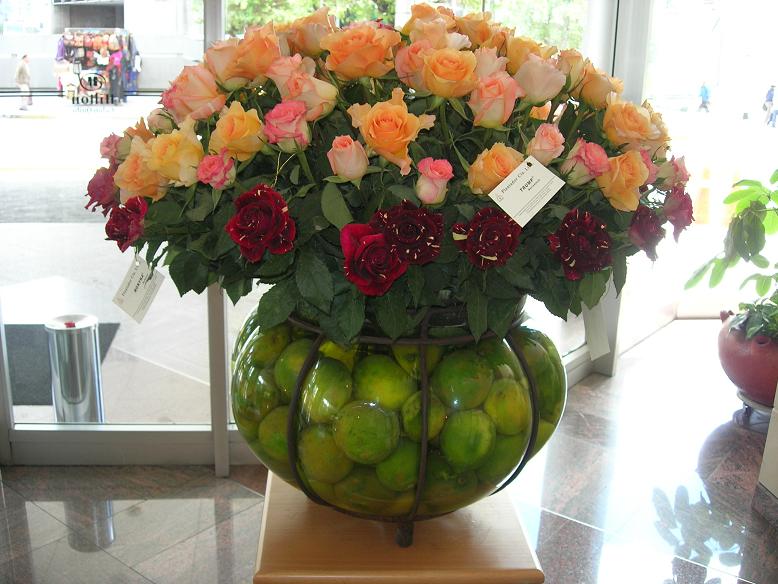
It's Good to Back to Ecuador-the Country of Rose

Ecuador is a tiny country about the size of Oregon, yet it encompasses a huge variety of elevations and environments, from the Pacific coast to glacier-clad Andean highlands, to the Amazonian low-lands, to the Galapagos Islands, 620 miles off the coast.  We experienced it all, in a months time, taking hundreds of pictures of which we will be able to show you only a few of the highlights.  We must share two separate posts however, for The Arasha Rainforest and The Galapagos Islands

Down town Quito, Ecuador
Otavalo
The largest indigenous market in South America

I just love the indigenous people

and Robert does too

Waterfalls are everywhere

The church members are so loving


Panecillo Hill
Ecuador was dedicated for missionary work in October 1965
by Elder Spencer W. Kimball.
The first converts were the taxi drivers
who took Elder Kimball to the Hill for the dedication.
He simply invited them to listen to the dedicatory prayer.

You can stop on the side of the road and pick and
eat a banana

Bickmore's being humanitarian missionaries had built a
relationship with the Colorado Indians and we were able
to enter their village

Rob tried to join the tribe, but they only accept redheads
Colorado Indian playing his homemade marimba 


One day we were able to help in the church storehouse
   
The craft villages of Ecuador provide a unique glimpse
 into the lives of the indigenous people who inhabit the area.
Each little village is "famous" for something.


Cotacachi for leather goods;
Wood carvings in San Antonio de Ibarra;
La Esperanza is known for its delicate embroidery.
Musical instruments in Peguche; Textiles in Agato .
Calderon is famous for its marzipan figures (Bread Dough )
We visited all of these places plus levi town, ice cream town,
taffy town, balsa town.  I can't even remember all of them!!


We purchased gifts for each of our kids in Puyo (Balsa Town)

I was most interested in how
the harvested the wood

This small village of Cotacachi made
every possible creation from leather.
We bought purses here.
 
 Peguche is one of the wealthiest towns in the Otavalo Valley.
The town’s artisans are renowned weavers.
They create detailed tapestries, rugs, blankets, bags and clothing,
which are shipped throughout the world


Chocolate Bean


Bananas waiting to be picked up for market
   
This rig was to take us up to witness an active volcano

The only thing we saw was this fire juggler

Oh, another waterfall !!

Loved helping in the classroom

Ecuador grows every kind of fruit you can imagine

Want to buy green beans?  They'll snip them for you


How about a little cuey  (guinea pig)  to go with the beans?

Who is hiding behind this waterfall?

Where do they grow all these roses?!!

See the shiny rectangular spot on the mountain side
It's a green house for roses


We drove over some absurd roads
 
and experienced many delays


but the scenery was always exquisite

and the other drivers always seemed happy to see us


Off to find an aligator

Rob in heaven with all his bananas

For a $1.00 you can hire your own hiking tour guide
(Ecuador uses American Currency)

They would even teach you to "swing"
thru' the jungle

This waterfall was off the beaten path


Another Waterfall !!


Tena, the capital of the Napo Province,
 is an attractive and quiet village in the Amazon rainforest.


Monkey's are everywhere and they love bananas, hats,
water bottles and cameras.  You have to hold tight to
your possessions 
  

Your looking up a tributary of the Amazon River

and of course we took the boat up the Amazon
a full days worth, stopping at several little villages
 
The children have so little, but they are happy
they wanted us to have one of their puppies
 
How this for firing your ceramics?


Off for a little fishing

This hike took us to a place that looked just like
Raiders of the Lost Ark

How's this for a saddle?


Went on many long hikes into the jungle
No bugs or snakes and we always felt very safe


After our hikes Rob always wanted his hammock and bananas


O.K.  That's enough pictures
 

Wednesday, 13 July 2005

Peru--The Sacred Valley and Machu Pichu


Being a very popular tourist "trap" we had made reservations
long in advance. The Villa was by far the nicest in Ollantaytambo
The  Sacred Valley

This picture taken out of our hotel window. 
The natives would bring in their goods
early in the morning and stay until after dark

Also from our window we would see
cows, horses, goats and donkeys just strolling around


There are two trains, The Vistadome and the Backpackers,
 that take you up the mountain side to Machu Pichu    

We chose the Vistadome
                                     
 The train ride took 1 1/2 hours.
This was our first glimpe of Machu Pichu

Machu Pichu is a huge tourist attraction, so it was
crowded and the day was humid
 
It's remarkable that Machu Picchu
was "undiscovered" by  the world until 1911.


 Spanish invaders of the 15th certury, never discovered the city, 
 nobody ever led them there, suggesting that the site
had long since been abondoned and forgotten.

 Hiram Bingham an American Explorer
decided to follow the old Spanish trade route from
Buenos Aires to Lima, and  to Cusco. 
 Here Hiram enjoyed the hospitality of the local peasants.

They  told Hiram  they had found an
extensive system of terraces on whose fertile soil
they had been growning crops on for the past four years.

Bingham hired several guides but eventually was guided
to the terraces by a 11-year old boy, Pablito Alvarez.
 They terraces numbered more than a hundred.
 Here young Pablito began to reveal to Bingham
a series of white granite walls which were exposing
themselves under thick forest foliage


One year later Bingham returned with an expedition
to clear away hundreds of years of vegetation.


The job took  less than 3 years
Bingham exported a good amount of Inca artifacts back to the United States


Those who have taken the time to research Machu Picchu history, still end up in the dark as to what the exact purpose of the city was. Scholars claim that when it comes to facts Machu Picchu must have been built some time around the year 1450 AD. Upon the arrival of the Spanish Conquistadors in the 1500"s, civil war was already threatening to put an end to a cohesive Inca Empire, and since many of the Spanish had made allies out of a good number of Inca citizens, it seems that at some point the Spanish would have learned about Machu Picchu’s existence. Since it appears that the Spanish knew nothing about ancient Machu Picchu, it is thought by some that the Inca people of the time knew nothing about it either. Thus, it is surmised that Machu Picchu fell on its own, without the aid of Spanish invaders. 

There are a number of theories about ancient Machu Picchu:
1.   The city was an important administrative center for the region
2.   It was a ceremonial center of sorts, capitalizing on its spiritually-invigorating location.
3.   It was the center of control for conquered regions, serving also as a sort of base for Incan                     aristocracy should they find themselves under attack.
4.  The city may have been a sort of royal estate for Pachacutec and populated primarily by Pachacutec’s  “family clan”.
5.  Some believe that Machu Picchu history includes the city’s participation either as a look-out post or a protected source of coca. The coca plant was used for religious purposes by the Inca, and it remains widely used by natives to this day

 Regardless of exactly how and why it was, Machu Picchu in Peru is the country’s top destination for a reason,
so set back and enjoy the following pictures:

Bickmore's will be our tour guide

These are said to be baths.  The higher royalty bathed
in the upper pools and lower ranks in the bottom pools


This huge solid stone was placed here by the Incas to
match it's natural background


It has been an exhausting day and we're ready to leave the ruins and return to our Hotel in the Sacred Valley,
but when we arrive where our train is to depart, we find armed police pushing people, not allowing them
to get on the train.  We find out their is a rail strike, which affected only  the Vistadome.  Dave says: "Let Me Handle This".  Now remember he speaks perfect Spanish, bad for us that the guards spoke Quechua.  Don't know how Dave managed to force us thru' the crowds towards the last backpackers train to depart that day, but he did, he and Mayrene forced their way on one car, yelling to us to jump on, we missed that car, but made the next one with Dave yelling "When they ask for your ticket, give them a blank, dumb look. It must have worked as they did approach us, but we didn't get kicked off.

People (mostly young) waiting for
 the last backpackers train to leave


This picture--part of the train route.
It would have been one long walk  !!

We were far to tired to walk to the Villa so we took
this cute "Taxi for Two"

Tuesday, 12 July 2005

PERU--Cusco

From Lima to Cusco is a short 55 minute flight
on a very small plane, with one flight a day.  You
have to be at the airport at 4:00am
 
Cusco elevation is 11,203'  It is suggested that you restrain
from physical activities for at least 6 to 8 hours.  That
you will experience a light head ache, lack of breath and
difficulty breathing but we're from Idaho so we went straight
to the ruins from the airport and we had the place to ourselves 
   
These Inca ruins are most extraordinary because of
the monumental stonework, constructed with castle like walls
For this experience we knew we needed a guide
  
After wandering around aimlessly for a while, we finally
found one.  He said he spoke English (ha, ha), but
he was funny!! and Dave was able to translated
his Spanglish for the rest of us.  He was a hoot. 
 The name of these ruins are Sacsayhuamán
pronounced pretty much like "sexy women"

He said this structure was most likely a religious temple,
although everyone believed the ruins had military significance.
The Inca emperor Pachacútec began the site's construction
in the mid-15th century,  it took nearly 100 years and  thousands
of men to complete it. These Massive stones were
brought from as far as 20 miles away.

The ruins, a  30-minute brisk walk from the center,
 cover a huge area, but are only about 1/4th of the original complex

The base stones are massive; some being 11'  tall,
and  weighing as much as  300 tons. Like all Inca constructions,
the stones fit together perfectly without aid of mortar.

The complex suffered such extensive destruction in one of the bloodiest battles between the Spaniards and native Cusqueños. More than 2 years after the Spaniards had initially marched on Cusco and took over the capital city, Juan Pizarro and his vastly outnumbered but superior armed forces stormed Sacsayhuamán in a horrific battle in 1536 that left thousands dead.

Today, what survive are the astounding outer walls,
constructed in a zigzag formation of three tiers.
(In the puma-shaped layout of the Inca capital,
Sacsayhuamán was said to form the animal's head,
and the zigzag of the defense walls forms the teeth.)


After the defeat of the Inca troops and the definitive Spanish
 occupation of Cusco, the Spaniards made off with the more
manageable sized stone blocks  to build houses
and other structures in the city below.
 

I didn't like downtown Cusco at all as the vendors "beggars"
were all over you.  But the natives I loved.  They were willing
to sell or make you anything, but were not pushy


They were even willing to teach you their skills
(if you had years to learn)


Never did I know there were so many kinds of llamas

they would eat anything you were willing to  feed them--
even your hat


The guide must have really liked us,
he stayed by our side most of the day

My  purchases were not bought in the city
but purchased from the natives

This one I wanted to buy and bring home with me.
Isn't he the cutest thing !!

I couldn't make head nor tails out of this one
so I'll leave him in Peru. 
The natives should to able to make plenty from his  wool